
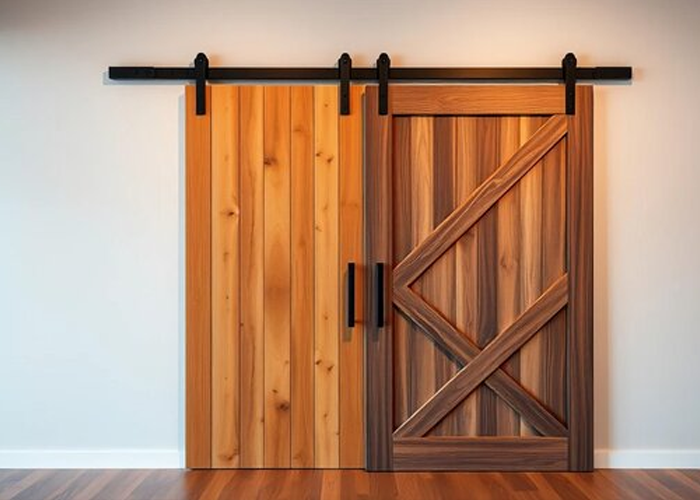
Most people think of barn doors as something you put inside the house. But exterior sliding barn doors are a real option, and they work well on porches, garages, back entrances, and outbuildings. The catch is that outdoor installs are a different job than indoor ones.
If you are used to how interior sliding doors work, there are some important differences to know before you start planning an exterior project.
Outdoor Conditions Change Everything
Tennessee weather is not gentle. You get hot summers, cold winters, heavy rain, and humidity that sticks around for months. Exterior sliding barn doors have to handle all of that without warping, swelling, or rusting. That is very different from interior sliding doors, which only deal with indoor air and light foot traffic. If you use the same materials outside that work inside, the door will not last.
Here is what Tennessee weather does to outdoor doors:
- Heat causes wood to expand and contract
- Humidity makes untreated wood swell and stick
- Rain can get behind finishes and cause rot
- Cold can make metal hardware contract and bind
Wood Choices for Exterior Use
Not all wood works well outside. Exterior sliding barn doors need wood that handles moisture well, such as cedar, white oak, or teak. These woods have natural oils or tight grain patterns that resist water better than pine or poplar.
Pine is fine for interior sliding doors, but it needs a lot of protection to survive outdoors. Choosing the wrong wood is one of the most common mistakes homeowners make when planning an exterior install.
Good wood choices for outdoor barn doors include:
- Cedar: Naturally resistant to moisture and insects
- White oak: Dense grain that handles weather well
- Teak: Very durable but expensive
- Pressure-treated wood: Works for utility buildings but less attractive
Finishes That Hold Up Outside
Even good wood needs the right finish outdoors. Exterior sliding barn doors need a finish that is rated for outdoor use, not just a standard interior stain or paint. Exterior-grade finishes create a stronger seal against moisture and UV damage.
Interior sliding doors can use lighter finishes because they are not exposed to sun or rain. Outdoors, a finish that is not rated for exterior use will peel or fade within a season or two.
You should look for finishes that offer:
- UV protection to prevent fading
- Moisture resistance to keep water out
- Flexibility to move with the wood as it expands
- Easy reapplication when the finish starts to wear
Hardware Ratings Matter More Outside
Hardware is one place where exterior sliding barn doors and interior sliding doors are very different. Indoor hardware does not need to resist rust or handle temperature swings. Outdoor hardware does.
You need track, rollers, and fasteners that are rated for exterior use, typically stainless steel or powder-coated steel. Standard interior hardware will start to rust quickly when it is exposed to humidity and rain.
When choosing hardware for exterior sliding barn doors, always check for:
- Stainless steel or marine-grade materials
- Powder-coated finish on exposed metal parts
- Weight rating that matches your door size
- Sealed bearings to keep water and dirt out
Clearance and Installation Requirements
Exterior sliding barn doors need more clearance planning than indoor doors because of weather protection. You need enough overhang above the door to keep rain off the track and hardware.
You also need to think about how far the door sits from the wall, because wind can push it open or slam it shut if it is not secured properly. Interior sliding doors do not need any of this kind of planning because they are protected from the elements.
Key clearance and install points to plan for:
- At least a few inches of roof overhang above the track
- A door stop or latch to hold the door in wind
- Enough wall space on the slide side for the door to open fully
- A gap at the bottom to prevent the door from dragging on wet ground
Weather Sealing for Exterior Doors
Sealing is something interior sliding doors almost never need, but exterior sliding barn doors usually do. Without a proper seal, wind, insects, and water can get in around the edges of the door.
Weatherstripping on the sides and a door sweep at the bottom help close the gap without blocking the sliding function. You do not need an airtight seal, but you do need enough protection to keep the worst of the weather out.
Good sealing options include:
- Brush-style weatherstripping on the sides
- A flexible door sweep at the bottom
- A drip cap above the opening to direct water away
- Foam backer rod in large gaps before installing trim
When to Use Exterior vs. Interior Sliding Doors
Not every opening needs an exterior door, and it helps to know which type fits your project. Exterior sliding barn doors are best for covered porches, garages, sheds, barns, and back entrances that get regular weather exposure.
Interior sliding doors work well for pantries, bedrooms, home offices, and laundry rooms where weather is not a factor. Choosing the wrong type for the space is easy to do if you have only ever worked with indoor doors.
Use exterior doors when:
- The opening faces outside or a covered porch
- The door will be exposed to wind, rain, or direct sun
- The space gets humidity from outside air regularly
- You need a door rated for temperature swings
Use interior doors when:
- The opening is fully inside the home
- The space is climate-controlled
- You want more style and finish options
- The door does not face outdoor elements
Want an Exterior Barn Door That Actually Holds Up?
Exterior barn doors are a great option for Tennessee homes, but they need the right wood, hardware, finish, and sealing to hold up over time. If you are planning an exterior barn door project in Tennessee, Tennessee Barn Doors can help you get it right. We build exterior sliding barn doors that are made for Tennessee weather, using the right materials and hardware for outdoor installs.
Contact us today to talk through your project and find out how we handle exterior work differently from standard interior sliding doors.
Frequently Asked Questions (FAQs)
Q: Can barn doors really be used outside?
Yes, barn doors work well outdoors on porches, garages, sheds, and side entries. They just need the right wood, hardware, and finish to handle weather and daily use properly.
Q: What is the best wood for exterior sliding barn doors in Tennessee?
Cedar and white oak are good choices because they handle moisture and humidity well. Softer woods like pine can work but need more upkeep and protection to last outdoors.
Q: Do exterior barn doors need special hardware?
Yes. Outdoor hardware should be rust-resistant, such as stainless steel or powder-coated steel. Standard interior hardware is not built for moisture and temperature changes and will wear out faster outside.
Q: How is installing an exterior barn door different from an interior one?
Outdoor installs need more planning around clearance, wall space, weather sealing, and hardware ratings. Interior doors stay in a dry space, so you do not have to worry about rain, wind, or humidity.
Q: Do exterior sliding barn doors need to be sealed?
They do not seal like a full entry door, but adding weatherstripping, a door sweep, and a drip edge above the opening helps keep out drafts, water, and insects reasonably well.
Q: How much maintenance do exterior barn doors need?
More than interior doors. You should check the finish regularly, especially after heavy rain or strong sun seasons. The finish may need touching up every few years to keep the wood protected.
Q: Is a custom barn door better than a stock door for outdoor use?
Usually yes. Outdoor openings are often uneven or nonstandard, and a custom door fits better, slides smoother, and covers the opening more cleanly than a stock size from a store.