
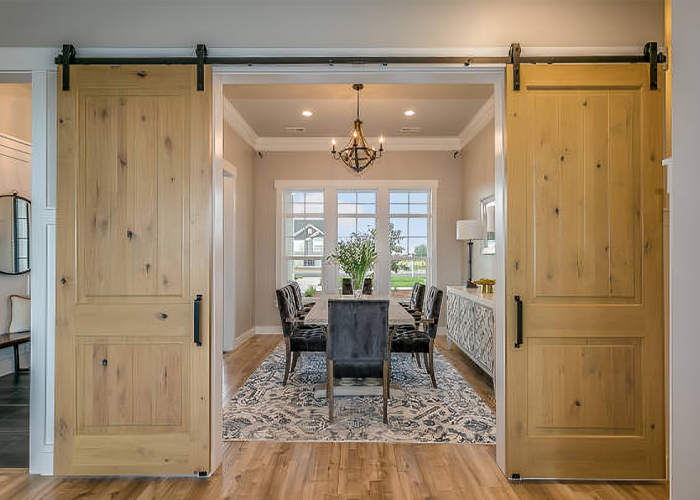
Blending Functionality, Style, and Modern Living
The platform of residential architecture has seen a visible change in the last ten years. The layouts that promote openness, flexibility, and efficient use of space are becoming popular among homeowners. Hinged doors used in traditional designs tend to disrupt traffic flow and limit the positioning of furniture.
Contemporary design has taken a specific focus on the structural features that enhance both functionality and even the aesthetic value. Interior barn doors have gained attention for fulfilling both objectives through a balanced combination of practicality and aesthetic clarity.
The Shift Towards Functional Design
Homeowners frequently reconsider how each design element contributes to daily living. Doors are no longer a function of division. They have an impact on space arrangement, movement, and utility of the rooms.
Interior sliding doors offer a solution that eliminates the clearance required by swinging panels. Their motion is parallel to the wall, which leaves useful square feet. This advantage is critical in small houses, apartments, and transitional spaces like hallways or home offices. The smallest design differences can be significant. The substitution of a traditional hinge system with a sliding mechanism improves the layout flexibility as well as daily convenience.
Clean Lines and Contemporary Appeal
Modern interior is still influenced by Minimalist aesthetics. Lines, low-key finishes, and simple surfaces are leading in design preferences. Interior barn doors align with this approach through simple panel construction and visible yet refined hardware systems.
Horizontal planks, flat surfaces, and glass accents add a visual appeal without distracting from the rest of the decor. Tracks of matte black or brushed metal rollers are hardware elements that help make a unified design statement. The outcome is intentional as opposed to flamboyant.
Adaptability Across Interior Styles
The versatility of the barn-style installations is one of their greatest strengths. They blend well with modern farmhouse, industrial, seaside, and Scandinavian interiors. Choice of finish defines general personality.
Warmth comes in with natural wood tones. Finishes on painted walls are a perfect match to modern settings. Panels made of glass enhance the spread of light among the spaces and preserve privacy.
Interior sliding doors also support multifunctional rooms. A guest room is easily turned into a home office. One can partition a bedroom and have a walk-in closet without interfering with the layout continuity. The ability to bend is the new advantage.
Space Efficiency in Modern Living
Effective utilization of space affects a lot of decisions on the renovation. There are bathrooms, narrow corridors, and laundry rooms that need to be planned. Conventional doors can inhibit movement or reduce storage space.
Interior barn doors eliminate those constraints by operating flush against the wall. This system enhances circulation and avoids barriers. The people can move freely without the need to make changes in furniture to fit door swings. Solutions design solutions, which enhance movement, tend to enhance the overall living experience.
Creating a Visual Focal Point
In contemporary houses, there is a tendency to use elements like light-hearted architectural decoration instead of being too ornamental. Barn doors add a sense of personality without overwhelming the room. Patterns on wood grains offer text on plain walls. The dark finishes make contrast in the lighter interiors. Glass panels are either frosted or clear, but create depth without losing discretion.
The perception is defined by the choice of materials. Reclaimed timber brings in rustic beauty. Contemporary minimalism is supported by smooth painted panels. Glass made of steel frames and structures fit well in industrial rooms. Context determines outcome.
Privacy with Flexibility
Open layouts promote interaction, though it needs flexibility in boundaries. Telecommuting, welcoming guests, and the use of common residence areas require reasonable separation solutions. Interior sliding doors allow homeowners to define areas temporarily without permanent structural changes. A glide is all that divides meeting space, quiet space, or relaxation space. In cases where it is desirable that the door be open, the door is laid discreetly along the wall. Such flexibility promotes changing domestic demands.
Material and Installation Considerations
The choice of the material has a direct impact on the performance and durability. Solid wood is very durable and provides a structural appearance. Engineered cores save on weight, but they do not lose their strength. Glass inserts have the effect of enhancing natural light. The quality of hardware is also of equal concern. One needs to have tracks that facilitate constant movement. Rollers are to run quietly. There must be proper reinforcement of the walls to make them stable.
When planning, homeowners usually scan the regional craftsmanship suppliers in the area, including Tennessee Barn Doors, in order to gauge their customization services that would meet the architectural proportions and structural demands. The correct metrology and stable fixation avoid the problem of alignment. Reinforcement within wall studs or added header support improves long-term reliability.
Sound and Practical Performance
Sliding systems have the advantage of visual privacy, but are not as properly sealed as hinged doors. Homes needing more acoustic control can use more insulation or soft-close hardware. Regular maintenance is not complicated. There is frequent cleaning of tracks and hardware to ensure smooth running. Installations of high quality usually need low maintenance over time.
Visual Continuity and Spatial Harmony
Modern interiors are more focused on uninterrupted sightlines. Sliding doors also help in visual continuity because it is parallel to the walls instead of sticking out. When open, they are open. They maintain a structural symmetry at the time they are closed. This uniformity increases general harmony in the design. Interior barn doors often support this seamless integration while adding subtle architectural interest.
Sustainability and Longevity
The aspect of sustainability affects buying patterns in residential markets. Numerous sliding doors made use of wood, which is responsibly obtained or reclaimed. Long-life construction contributes to the life of the product and lowers the replacement rate. Environmental responsibility is an attribute of long-term reliability. High-quality craftsmanship minimizes waste and promotes the prudent use of resources.
Technology and Modern Lifestyles
Houses are becoming more technologically smart and multimedia. These developments are supplemented by sliding systems that allow flexible room layouts. During movie sessions, a media room might need to be separated. A home gym can do with a temporary closure. Interior sliding doors support these transitions without complex remodeling. Soft-close functions and reinforced tracks provide a user experience and simplify it at the same time.
Market Growth and Consumer Interest
Barn-style installations are always featured in design publications and remodeling websites. The concept of sharing on a social level promotes the creation of awareness and testing of the latest details in architecture. Interest in interior barn doors reflects a broader desire for individualized yet functional design. Homeowners want efficiency in features that are also personalized. Sliding systems meet both the priorities without congesting the interiors.
Conclusion
The current home design is more focused on space efficiency, versatile designs, and elegant decoration. The priorities are met in installations of a barn character by practical engineering and flexible styling. They save on space, add architectural appeal, and offer flexible privacy.
The results will be satisfactory through careful consideration of materials, installation techniques, and durability over the long run. When selected thoughtfully, interior barn doors transform rooms into adaptable environments that respond to everyday needs. Continuing demand depicts that this design option is not just a passing style.
Frequently Asked Questions
Q. How do interior barn doors improve space efficiency in modern homes?
Interior barn doors slide parallel to the wall, which removes the clearance required by hinged doors. This design frees up usable floor space and improves movement within smaller rooms or narrow hallways.
Q. Are interior sliding doors suitable for compact apartments?
Interior sliding doors work exceptionally well in compact apartments because they maximize available square footage while maintaining privacy between spaces.
Q. Do interior barn doors provide enough privacy for bedrooms and offices?
Interior barn doors offer strong visual privacy. For enhanced sound control, homeowners can select solid-core materials or incorporate additional insulation features.
Q. What materials work best for interior sliding doors?
Interior sliding doors commonly use solid wood, engineered wood cores, or glass panels. The choice depends on desired durability, light flow, and overall design style.
Q. Can interior barn doors match traditional home interiors?
Interior barn doors can complement traditional spaces when finished in neutral paint tones or classic wood stains that align with existing architectural details.
Q. Are interior sliding doors difficult to maintain?
Interior sliding doors require minimal maintenance. Regular track cleaning and occasional hardware inspection help maintain smooth and quiet operation.
Q. Why are interior barn doors becoming more popular in modern home design?
Interior barn doors combine practical space-saving functionality with clean architectural lines. Their adaptability across various design styles makes them a preferred choice for contemporary residential layouts.